Welcome to the Wirral Methodist Circuit

MEDITATION – ANIMALS (4) THE BEAR

MEDITATION – ANIMALS (4) THE BEAR

Not only did David have to contend with lions in his shepherding days, but bears were also a threat to his flock (I Samuel chapter 17 verses 34 – 37). They were quite common in the Middle East in Old Testament times, when much more of the land was forested than in the present day.

A strange incident involving bears is recorded in 2 Kings, chapter 2, verses 23 and 24. The prophet Elisha cursed some boys who were mocking him and calling him “Baldy”. Two she- bears came out of the woods and tore forty-two of the boys to pieces. Having little hair on top myself, I have a degree of sympathy with Elisha, but calling down a curse like this upon the boys seems an over-reaction, to say the least.

Seriously, it is hard to imagine a man of God acting in such a vindictive manner towards some cheeky youngsters. I suspect this story got into 2 Kings because it was told by parents to their children as a warning against making fun of their elders. In a similar way, many cultures around the world have legends about fearsome lake dwelling monsters, which were probably told at first to stop children playing too close to the water. The story also shows the awe and respect with which a prophet was regarded: this was a man you messed with at your peril!

page1image2467527360

We must remember, too, that the Old Testament gives us an account of a developing relationship between a people and their God. It contains some wonderful insights into His being and His nature, but at times its writers convey an understanding of God that appears to conflict with the full revelation given to us by Jesus Christ.

How different is the reaction attributed to Elisha in the 2 Kings story to that of Jesus recorded in the Gospel according to St Luke, chapter 9, verses 51 – 55. When the people of a Samaritan village refused to receive Him, he rebuked James and John for wanting to call down fire upon them. St Luke also records, in chapter 23, verse 34, that even as Jesus was being crucified, rather than cursing His tormentors, He prayed that they might be forgiven.

A prayer:

Lord Jesus Christ, I admit that I am a sinner. I confess my sins to you, especially those upon my conscience. I firmly believe that you died for me to take away my sins. And now, according to your promise, I open my heart to you. Come in, Lord Jesus, and be my Saviour and Friend for ever. AMEN

(source unknown)

Image: Syrian brown bear (pixabay.com)
Animals of the Bible (3) The Lion

Animals of the Bible (3) The Lion

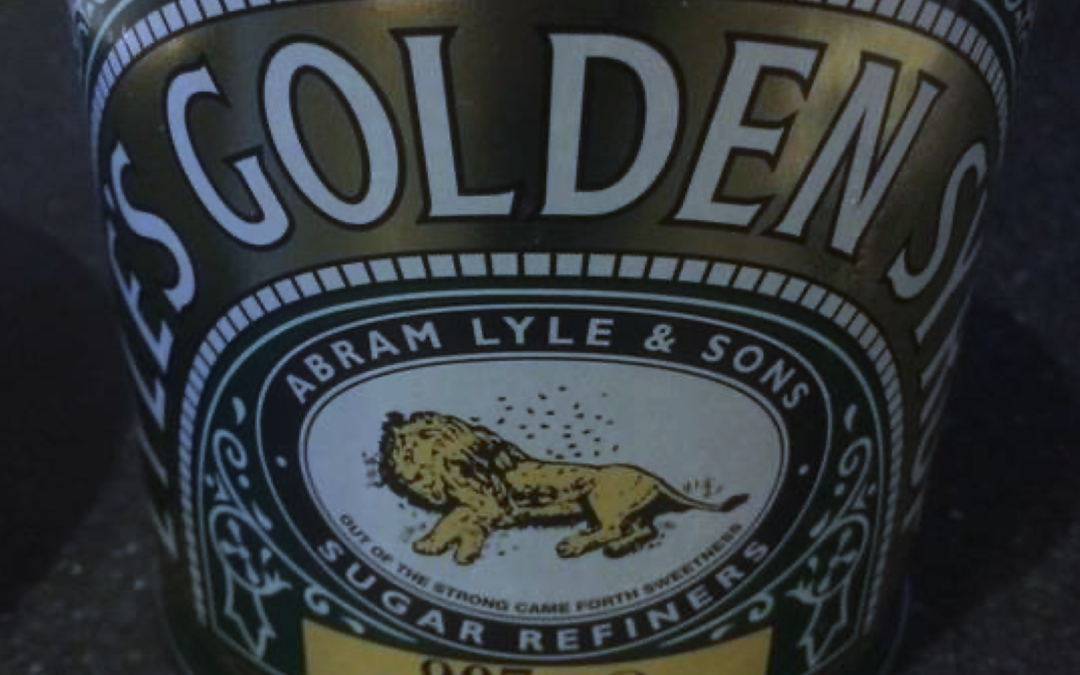
In Old Testament times, lions were to be found throughout the Middle East, and they feature in a number of Bible stories. Samson killed one with his bare hands, and later found a swarm of bees had made their home inside its carcass (Judges, chapter 14). He told the Philistines a riddle about it, “Out of the strong came forth sweetness”, which Abram Lyle adopted in 1883 as a trade mark for his Golden Syrup, along with the picture of the dead lion and the bees which still appears on Lyle’s Golden Syrup tins and bottles today.

David defended his sheep from lions (1 Samuel 17, verses 34 – 37), and Daniel spent a night in a pit with several of them (Daniel chapter 6). Lions were still present in the Holy Land in New Testament times, but much rarer. They were not completely eradicated there until the time of the Crusades, and some survived in Iraq and Iran until the early 1900s. All these lions belonged to a distinct Asiatic sub-species, which is now only found wild in the Gir Forest reserve in Gujarat, India. Some are also kept in captive collections, including at Chester Zoo.

In the Revelation to St John, chapter 5, Christ is called “The lion of Judah” (verse 5). This title goes back to Jacob’s final blessing of his sons, in Genesis chapter 49, where he declares “Judah is like a lion” (verse 9). In John’s vision, however, Christ, though announced as a lion, appears as a lamb bearing the marks of slaughter. We are presented with the great mystery of the Incarnation, the “meekness and majesty”, as Graham Kendrick puts it, of “the man who is God” (Singing the Faith 362).

page1image2053794496

C. S. Lewis used the lion imagery from Revelation in his Narnia stories. In “The Lion, the Witch and the Wardrobe” Aslan the lion is killed by his enemies, but comes back to life and puts an end to Narnia’s long winter. We can rejoice that the power of God has been revealed in the death and resurrection of Jesus Christ, who in apparent weakness conquered the powers of darkness, and death itself, for ever.

A prayer:

Thanks be to you, Lord Jesus Christ,
for all the benefits which you have won for us,
for all the pains and insults which you have borne for us. O most merciful Redeemer, Friend and Brother,
may we know you more clearly,
love you more dearly,
and follow you more nearly, day by day. AMEN

(Richard of Chichester, 1197 – 1253)

Image: Tate & Lyle Golden Syrup tin (photo Pete Wildman)

Animals of the Bible (2) The Camel

Animals of the Bible (2) The Camel

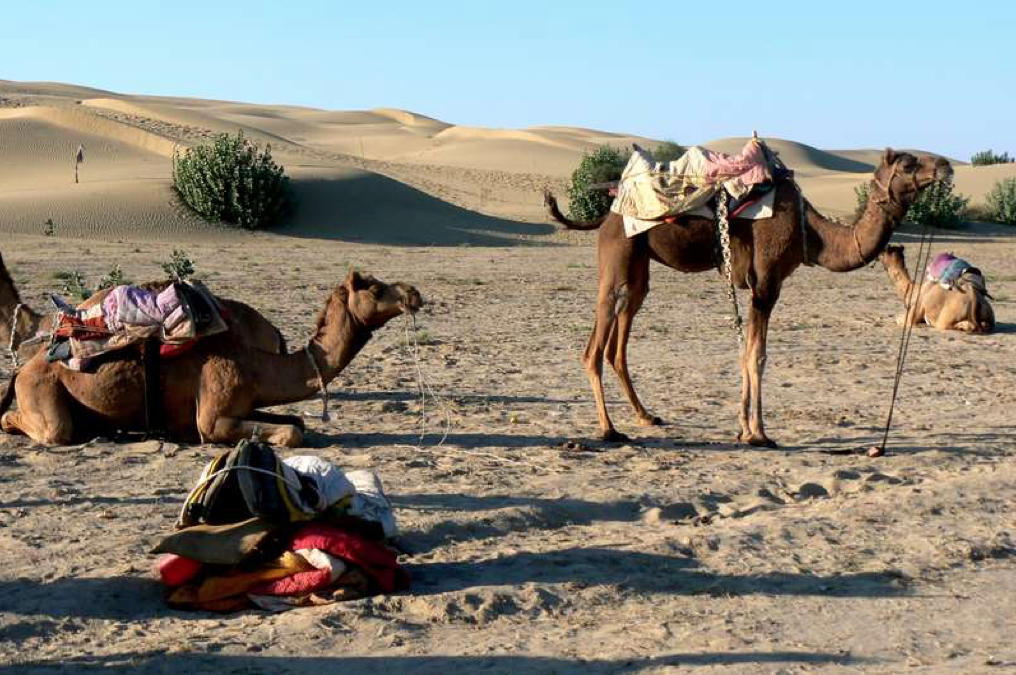
The camel, like the ox, often finds its way into pictures of the Nativity, especially on Christmas cards depicting the Wise Men. Also like the ox, it is nowhere mentioned in the Gospel stories of the birth of Jesus. It is quite likely, however, that wealthy travellers like the Magi would have ridden camels.

We saw last week how the ox became part of the traditional Nativity scene because of a text in the first chapter of the Book of the Prophet Isaiah. For a similar reason the camel found its place in depictions of the journey and arrival of the Wise Men. In Isaiah chapter 60, verse 6, we read “A multitude of camels shall cover you, the young camels of Midian and Ephah; all those from Sheba shall come. They shall bring gold and frankincense, and shall proclaim the praise of the Lord.” Because gold and frankincense are mentioned, this prophesy about the nations coming to worship the God of Israel became associated with the story of the Magi coming to bow down before the infant Messiah.

The Lord Jesus Himself referred to the camel after His meeting with the man who is often referred to as “The Rich Young Ruler”. He declared, “It is much harder for a rich person to enter the Kingdom of God than for a camel to go through the eye of a needle” (Mark chapter 10, verse 25). Some commentators have suggested that He had in mind a small gate called “The Needle’s Eye” in the city wall of Jerusalem. It could be opened to let someone in after the large main gates had been closed for the night. A camel was just able to pass

page1image611005856

through it, but not if it was carrying a load. Understood this way, the parable tells us that money and possessions must not be allowed to dominate our lives. We have to put Jesus first and be ready to drop all the baggage that keeps us from walking in His Narrow Way. That was what the Rich Young Ruler was unwilling to do.

A prayer:

Take my silver and my gold, not a mite would I withhold…take my love; my Lord, I pour at thy feet its treasure-store; take myself, and I will be ever, only, all for thee. AMEN

(From Singing the Faith 566, by Frances Ridley Havergal, 1836 – 1879)

– Rev John Barnett
Image: camels in the desert (photo by Pete Wildman)

Animals of the Bible (1) The Ox

Animals of the Bible (1) The Ox

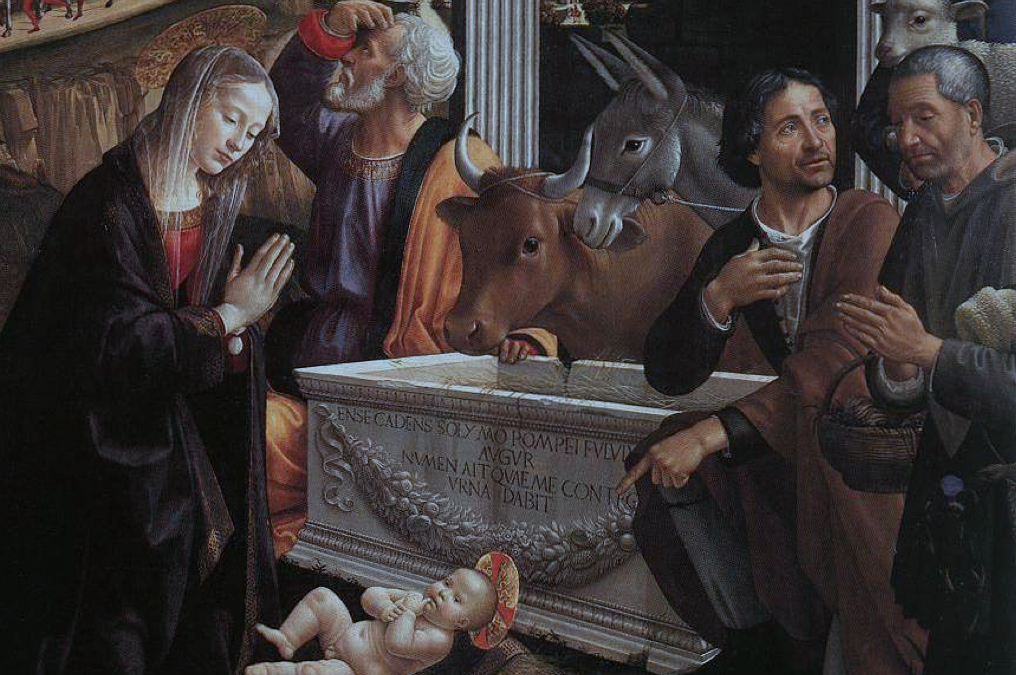
In artistic depictions of the Nativity, an ox is frequently shown standing by the manger with an ass. None of the Gospels, however, mention either of these animals as having been present when Jesus was born. There might well have been an ass there, as it was a common beast of burden, used by all kinds of merchants and tradesmen. Why, though, would there have been an ox, an animal used mainly for ploughing and other agricultural purposes, in a stall in the urban surroundings of Bethlehem?

The answer may lie in the Book of the Prophet Isaiah, chapter 1, verse 3: “The ox knows its owner, and the donkey its master’s crib; but Israel does not know, my people do not understand.” These so-called “dumb animals”, the prophet is saying, know what is good for them, but the Israelites do not. The ox and ass recognise the person who provides for themand feeds them but God’s people have rebelled against the One who cares for them and nourishes them in body, mind and spirit.

The ox and ass of our carols and Christmas cards remind us, therefore, that the Child in the manger is the One in whom and through whom our deepest needs are met, and they invite us to “come and adore Him, Christ the Lord”. The old legend of the oxen kneeling on Christmas Eve conveys the same message: these animals have something to teach you and me.

The ox is also mentioned in Deuteronomy, chapter 25, verse 4, where we are told, “You shall not muzzle an ox while it is treading out the grain.” When cereal crops were harvested the

page1image1246605824

sheaves would be spread out on a hard threshing floor and oxen would be driven over the corn again and again so the trampling of their hooves would separate the grain from the straw and chaff. The Israelites were forbidden to put a muzzle on an ox used in this way to stop it taking an occasional mouthful for itself. The Law thus recognised the right of a working animal to have its share of the results of its labours.

This Old Testament rule reminds us of our responsibility towards the other living creatures that share our planet with us. They are not to be exploited mercilessly, but should be treated with kindness and respect.

A prayer:

O Loving Father, we entreat Thee for our fellow creatures, the cattle, the beasts of the field and the fowls of the air; beseeching Thee that, recognising always our responsibility towards them, we may learn from them to fulfil our appointed tasks in humility and trustfulness; through Jesus Christ our Lord. AMEN

(Source Unknown)

– Rev John Barnett

Image: Domenico Ghirlandaio, Adoration of the Shepherds, 1483-85 (Web Gallery of Art, www.wga.hu)

Welcome to our new website!

Welcome to our new website!

The new Wirral Methodist Circuit website site has been launched alongside the publication of our new booklet, ‘Good News’. This booklet brings together a collection of stories of the good work being done, and the powerful ways that God is working in and through the Methodist Churches on the Wirral.

You can read some of those good news stories on this site and also find out about events, activities and worship throughout the Wirral. You can read news from a Christian perspective and keep up to date with the latest ‘tweets’ from the Methodist Church.