Welcome to the Wirral Methodist Circuit

Shepherds and the Good Shepherd (1) Jacob

Shepherds and the Good Shepherd (1) Jacob

Shepherds feature a lot in the Bible. During Advent, I hope to focus on some of the shepherds of the Old Testament who point us forward to the coming of the Good Shepherd.

At the beginning of the first coronavirus lockdown I wrote about Jacob, a fugitive from the wrath of his brother, Esau. Alone and far from home, he dreamed of a stairway up to heaven; a sign that wherever he might wander, God would be with him. As his father, Isaac, had instructed him, he travelled on to Mesopotamia (modern Iraq), to the home of his uncle Laban. He fell in love with his cousin, Rachel, whose name means “a lamb”. Jacob agreed to work for Laban for seven years in order to be allowed to marry her. He spent much of this time caring for Laban’s flocks of sheep and goats.

Chapters 29 – 31 of the Book of Genesis tell the story of the relationship between Jacob and Laban, two cunning and scheming men trying to get the better of one another. Laban tricked Jacob into marrying his elder daughter, Leah, and then made him work another seven years as payment for marrying Rachel. Jacob got Laban’s permission to keep any blacklambs or speckled kids from the flocks for himself, but Laban then saw to it that the black and speckled sheep and goats were put into the care of his own sons and taken some distance away. Jacob nevertheless succeeded, through clever stockbreeding, in building up a large flock for himself. The ancient breed of “Jacob Sheep”, with their distinctive piebald markings, was so named because of this story.

With the collusion of his two wives, Jacob eventually escaped from Laban and returned to the land of Canaan, where he was reconciled with his brother, Esau. The night before their meeting he had another remarkable encounter with God, not with a heavenly stairway as on

his outward journey, but through a meeting with a man who wrestled with him until daybreak. Jacob was given the new name of Israel (“he struggles with God” or “God struggles”), which would in time become the name of the nation he was to found.

Not surprisingly, there was rivalry between Leah and Rachel, especially as Leah bore six sons and a daughter before Rachel became pregnant with her first son, Joseph. Both sisters in turn gave their slave-girls Bilhah and Zilpah to Jacob, so they too could bear him children on their behalf. The result was a large and dysfunctional family and a band of brothers whose jealousy even led them to sell their sibling into slavery.

In spite of all the scheming and trickery, the envy, bickering and downright wickedness, God was still working His purpose out. Rachel’s son, Joseph, would rescue the family from starvation and bring them to safety and prosperity in Egypt. Leah’s son, Judah, would become the father of the tribe within which, in the fullness of time, the Saviour of the World would be born.

A prayer:

May the strength of God pilot us, May the power of God preserve us, May the wisdom of God instruct us, May the hand of God protect us, May the way of God direct us,

May the shield of God defend us,
May the host of God guard us against the snares of evil and the temptations of the world. AMEN

(St Patrick)

– Rev John Barnett
Image: modern-day shepherd in Jordan (photo: Pete Wildman)
Animals of the Bible (13) The Fish

Animals of the Bible (13) The Fish

In mid-March last year, soon after the first lockdown began, I wrote the first of what has turned into a weekly series of meditations. A few weeks later I wrote of how some of the disciples met with the risen Lord Jesus on the Galilean lakeside after He directed them to throw their net out again after an unsuccessful night’s fishing. When they tried to draw the net back in they could not, because it was so full. They towed it to the shore, and when Simon Peter dragged it up the beach they found they had caught a hundred and fifty-three large fish.

What was the significance of this number? Many ingenious suggestions have been made down through the centuries. The simplest is that given by St Jerome. He said that in the sea there were one hundred and fifty-three known kinds of fishes, and the catch therefore included every kind. So the number symbolizes the fact that one day all people of all nations will be gathered together to Jesus Christ. In St John’s Gospel chapter 21 we read that although there were so many fish, the net did not tear. The net can be understood to represent the Church. God’s love is for all people, regardless of nationality, ethnicity or language, so the Church, too, must be big enough to hold them all.

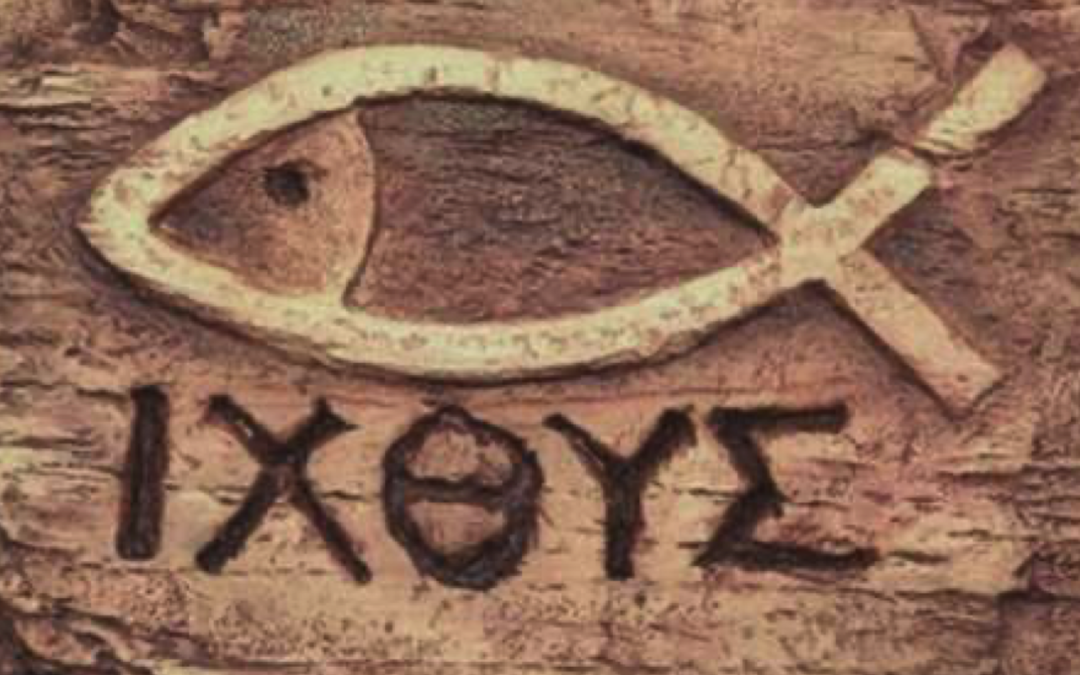
Some of Jesus’ disciples were, of course, fishermen by trade. Some of His miracles involved fish, and He made use of fishing boats both as a means of transport and as a pulpit (Mark 3: 9). It is hardly surprising, therefore, that one of the early symbols used by Christians was the Sign of the Fish. It was some time later that the Cross became the predominant symbol of the Christian Faith; after all, in the early years of the Church crosses were still being used as cruel instruments of execution. The Greek word for “fish”, ICHTHUS (in Greek letters ΊΧΘΥΣ) also made up the initial letters of the words Iesous CHristos THeou Uios Soter, meaning “Jesus Christ, God’s Son, Saviour”. So here was a secret sign which also summed up the heart of Christian belief and served as a simple aid to help explain it.

After just over twelve months writing these meditations, I feel that now is the appropriate time for me to bring them to an end. To everyone who has read all or some of them, thank you. I hope you have found them helpful during this difficult year. I wish to record my special thanks to Pete Wildman for making them available through the Wirral Circuit website, and for the vivid and fitting illustrations, including some of his own photographs, which he has found to accompany and enhance them. God bless you all.

A Prayer:

No more we doubt thee, glorious Prince of life;
life is naught without thee: aid us in our strife;

make us more than conquerors through thy deathless love; bring us safe through Jordan
to thy home above:

Thine be the glory,
risen, conquering Son,
endless is the victory
thou o’er death hast won. AMEN

(Singing the Faith 313, Edmond Budry, 1854 – 1932, translated by Richard Birch Hoyle, 1875 – 1939)

– Rev John Barnett

Image: Christian ICHTHUS symbol.

Animals of the Bible (12) The Lamb

Animals of the Bible (12) The Lamb

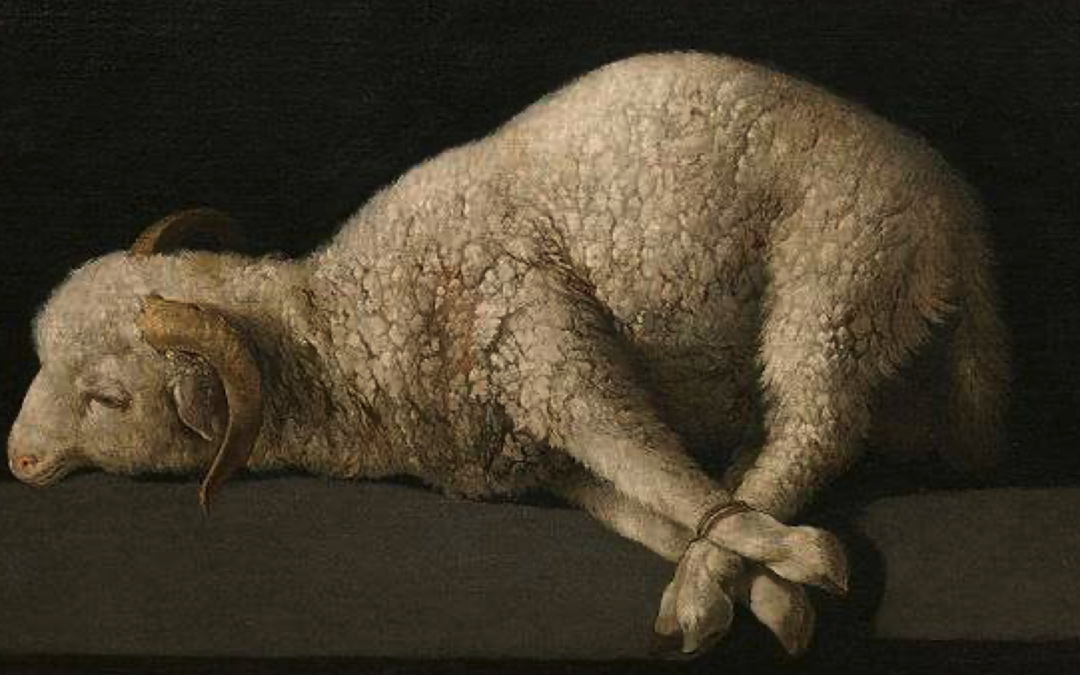
Sheep are not the quietest of animals. I recall how, on a camping holiday, next door to a field of ewes and lambs, I was kept awake by the constant bleating through the night, as the sheep called to each other in the darkness. When sheep are handled, however, they fall silent. A sheep being sheared does not bleat. It is the instinctive reaction of a prey animal not to cry out when it feels under threat and thus risk attracting more predators to the attack.

The prophet Isaiah was aware of this when he wrote “He was treated harshly, but endured it humbly; he never said a word. Like a lamb about to be slaughtered, like a sheep about to be sheared, he never said a word.” (Isaiah 53:7, Good News Bible). We are reminded of those words when we read, in St Matthew’s Gospel, of the dignified silence of Jesus at His trial before Pilate, who asked Him, “Don’t you hear all these things they accuse you of?” But Jesus refused to answer a single word, with the result that the Governor was greatly surprised (Matthew 27: 13 & 14).

At the beginning of our Lord’s ministry, when John the Baptist pointed Him out to his disciples, he declared, “There is the Lamb of God!” (John 1: 35). In the Book of Revelation, Jesus appears in the form of a Lamb, bearing the marks of slaughter (Revelation 5: 6 – 14). These passages take us right back to the story of the Exodus, and the blood of the lambs that was smeared around the doors of the Israelites to identify them and protect their sons from the fate that was to strike the firstborn of the Egyptians.

When Jesus ate the Passover meal with His disciples, recalling the story of Israel’s deliverance from captivity in Egypt, He took wine and declared, “This is my blood, which seals God’s covenant, my blood poured out for many for the forgiveness of sins.” (Matthew

26: 28). As the blood of the lambs spared the Israelites and marked the beginning of their deliverance from the oppression of the Egyptians, so the blood of the Lamb would deliver His people from the oppression of sin and death.

A prayer:

Just as I am, without one plea
But that thy blood was shed for me, And that thou bidd’st me come to thee, O Lamb of God, I come! AMEN

(Charlotte Elliott, 1789 – 1871)

– Rev John Barnett

Image: Agnus Dei (Lamb of God), by Francisco de Zurbarán (1598-1664)

Animals of the Bible (11) The Donkey

Animals of the Bible (11) The Donkey

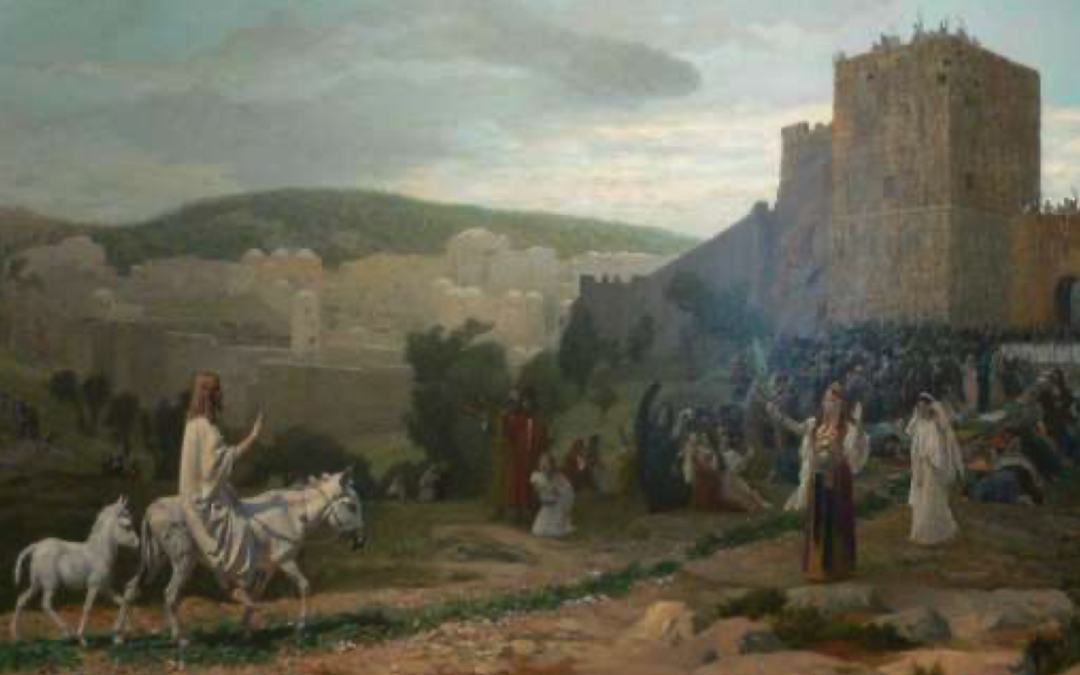
“He must have been a very good horseman!” That was the comment of an American cowboy on the story of the triumphal entry of the Lord Jesus into Jerusalem. He had a point. The Gospels tell us that the donkey Jesus rode was a young colt, which had never been ridden before. People were shouting, waving branches and laying down cloaks on the road ahead. It sounds rather like the training given to police horses today! And yet the donkey calmly carried Jesus through the streets and up to the Temple.

Animals can sense when someone is gentle and means them no harm. Many of the stories of the saints speak of their affinity with animals which trusted them and came close to them. I think the donkey somehow recognised that it was safe in the hands of Jesus, and so made no attempt to bolt or to throw Him off.

Matthew and John both connect this event with the words of the prophet Zechariah (chapter 9, verse 9). In the Good News Bible this reads, “Rejoice, rejoice, people of Zion! Shout for joy, you people of Jerusalem! Look, your king is coming to you! He comes triumphant and victorious, but humble and riding on a donkey – on a colt, the foal of a donkey.” The way the animal is described as “the foal of a donkey” makes it clear that this is a pure-bred donkey and not a mule, the offspring of a jackass and a mare.

Zechariah’s prophecy, written more than five hundred years before the coming of Christ, itself echoed an older passage, Genesis 49, verse 11. Jacob blessed his sons before he died, and said of Judah, “Binding his foal to the vine and his donkey’s colt to the choice vine, he washes his garments in wine, and his robe in the blood of grapes” (New Revised Standard Version). Jacob was speaking prophetically of the wealth of Judah’s descendants, included

among whom were David and Solomon and the kings who followed in their line. A donkey tethered to a grapevine would proceed to eat its juicy shoots, and only a wealthy man could afford to lose some of his crop in this way.

Jesus, hailed as the son of David, had all the wealth of heaven at His disposal, but as Charles Wesley puts it, “emptied Himself of all but love.” By riding into Jerusalem, surrounded by His followers, He was declaring that He was entering the city as a victorious king. This King, however, was coming in peace, seated on a donkey rather than a warhorse. What that meant for Him, and for us all, was revealed a few days later, when His victory was won, not on a battlefield, but on a cross.

A prayer:

Lord Jesus, who entered Jerusalem as a conquering King, yet coming in peace, enter into our hearts and establish in us your kingly reign of love, for your name’s sake. AMEN

– Rev John Barnett

Image: Entry of the Christ in Jerusalem, Jerome JeanLeon (1824-1904)

Animals of the Bible (10) The Hen

Animals of the Bible (10) The Hen

Last week, the week before Mothering Sunday, I wrote of how a loving mother’s prayer was granted by the Lord Jesus. This week we see Jesus expressing the mother love of God Himself.

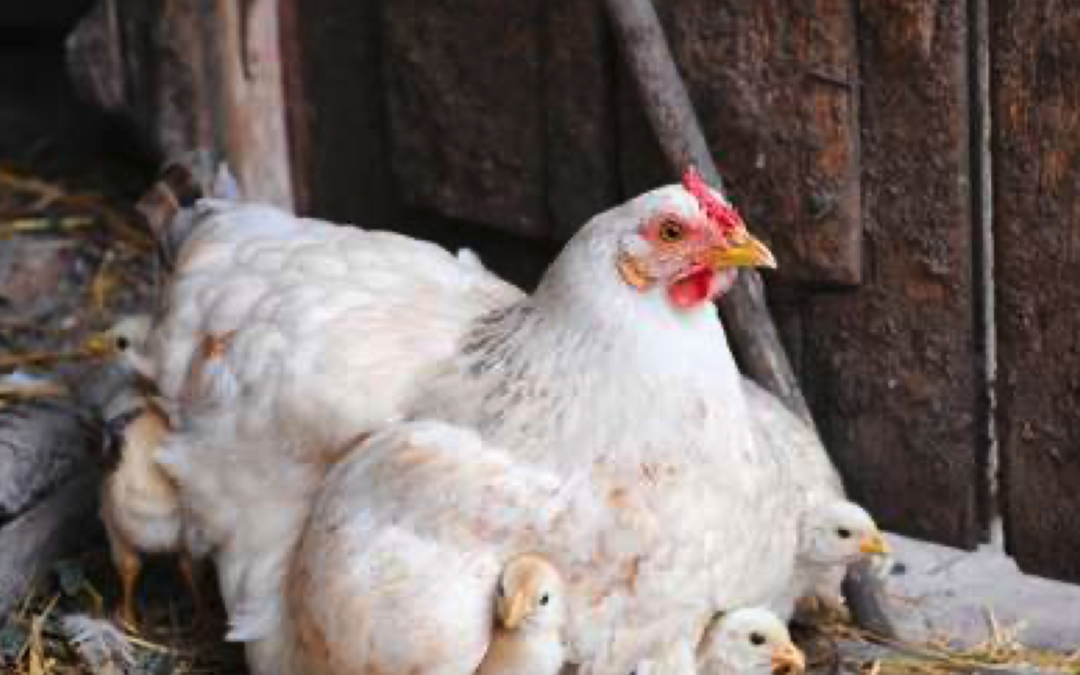
Both Matthew (chapter 23) and Luke (chapter 14) record how Jesus lamented over the Holy City, “Jerusalem, Jerusalem! You kill the prophets, you stone the messengers God has sent you! How many times have I wanted to put my arms round all your people, just as a hen gathers her chicks under her wings, but you would not let me”! Jesus foresaw the destruction that was to befall Jerusalem, and He must have longed for its people to turn to Him and accept the salvation He alone could give them.

Hens with their chicks, scratching in the dust around houses and barns, would have been a familiar sight to people in those days. When I was a boy, we kept chickens in a run at the bottom of the garden, as did many of our neighbours. I loved to watch a hen with her chicks around her, and recall how, at the slightest hint of danger, the mother would cluck and the chicks would come running to hide under her wings.

I read once of two men who were walking through the remains of a barn that had been destroyed by fire. One of them kicked casually at a small black mound among the ashes, and

page1image1700310496

three little chicks ran out from under it. It was the body of a hen that had died protecting her young from the flames.

Our Lord compared His love for the people of Jerusalem to that of a hen calling her chicks to herself and sheltering them protectively with her own body. That love was to take Him, not long after, to a cross outside the city where He laid down His life for us all.

A prayer:

O God, we have known and believed the love that you have for us. May we, by dwelling in love, dwell in you, and you in us. Teach us, O heavenly Father, the love wherewith you have loved us; fashion us, O blessed Lord, after your own example of love; shed abroad, O Holy Spirit of love, the love of God and man in our hearts. For your name’s sake. AMEN

(Henry Alford, 1810 -71)

– Rev John Barnett
Image: CackleHatchery.com.