Welcome to the Wirral Methodist Circuit

Animals of the Bible (13) The Fish

Animals of the Bible (13) The Fish

In mid-March last year, soon after the first lockdown began, I wrote the first of what has turned into a weekly series of meditations. A few weeks later I wrote of how some of the disciples met with the risen Lord Jesus on the Galilean lakeside after He directed them to throw their net out again after an unsuccessful night’s fishing. When they tried to draw the net back in they could not, because it was so full. They towed it to the shore, and when Simon Peter dragged it up the beach they found they had caught a hundred and fifty-three large fish.

What was the significance of this number? Many ingenious suggestions have been made down through the centuries. The simplest is that given by St Jerome. He said that in the sea there were one hundred and fifty-three known kinds of fishes, and the catch therefore included every kind. So the number symbolizes the fact that one day all people of all nations will be gathered together to Jesus Christ. In St John’s Gospel chapter 21 we read that although there were so many fish, the net did not tear. The net can be understood to represent the Church. God’s love is for all people, regardless of nationality, ethnicity or language, so the Church, too, must be big enough to hold them all.

Some of Jesus’ disciples were, of course, fishermen by trade. Some of His miracles involved fish, and He made use of fishing boats both as a means of transport and as a pulpit (Mark 3: 9). It is hardly surprising, therefore, that one of the early symbols used by Christians was the Sign of the Fish. It was some time later that the Cross became the predominant symbol of the Christian Faith; after all, in the early years of the Church crosses were still being used as cruel instruments of execution. The Greek word for “fish”, ICHTHUS (in Greek letters ΊΧΘΥΣ) also made up the initial letters of the words Iesous CHristos THeou Uios Soter, meaning “Jesus Christ, God’s Son, Saviour”. So here was a secret sign which also summed up the heart of Christian belief and served as a simple aid to help explain it.

After just over twelve months writing these meditations, I feel that now is the appropriate time for me to bring them to an end. To everyone who has read all or some of them, thank you. I hope you have found them helpful during this difficult year. I wish to record my special thanks to Pete Wildman for making them available through the Wirral Circuit website, and for the vivid and fitting illustrations, including some of his own photographs, which he has found to accompany and enhance them. God bless you all.

A Prayer:

No more we doubt thee, glorious Prince of life;
life is naught without thee: aid us in our strife;

make us more than conquerors through thy deathless love; bring us safe through Jordan
to thy home above:

Thine be the glory,
risen, conquering Son,
endless is the victory
thou o’er death hast won. AMEN

(Singing the Faith 313, Edmond Budry, 1854 – 1932, translated by Richard Birch Hoyle, 1875 – 1939)

– Rev John Barnett

Image: Christian ICHTHUS symbol.
Animals of the Bible (12) The Lamb

Animals of the Bible (12) The Lamb

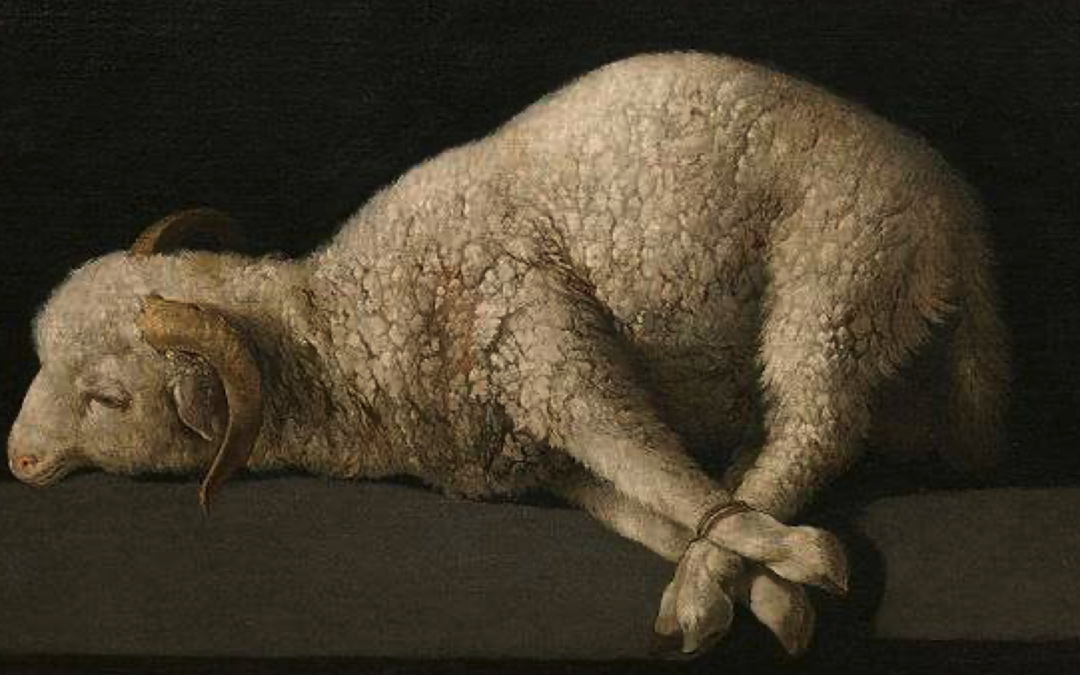
Sheep are not the quietest of animals. I recall how, on a camping holiday, next door to a field of ewes and lambs, I was kept awake by the constant bleating through the night, as the sheep called to each other in the darkness. When sheep are handled, however, they fall silent. A sheep being sheared does not bleat. It is the instinctive reaction of a prey animal not to cry out when it feels under threat and thus risk attracting more predators to the attack.

The prophet Isaiah was aware of this when he wrote “He was treated harshly, but endured it humbly; he never said a word. Like a lamb about to be slaughtered, like a sheep about to be sheared, he never said a word.” (Isaiah 53:7, Good News Bible). We are reminded of those words when we read, in St Matthew’s Gospel, of the dignified silence of Jesus at His trial before Pilate, who asked Him, “Don’t you hear all these things they accuse you of?” But Jesus refused to answer a single word, with the result that the Governor was greatly surprised (Matthew 27: 13 & 14).

At the beginning of our Lord’s ministry, when John the Baptist pointed Him out to his disciples, he declared, “There is the Lamb of God!” (John 1: 35). In the Book of Revelation, Jesus appears in the form of a Lamb, bearing the marks of slaughter (Revelation 5: 6 – 14). These passages take us right back to the story of the Exodus, and the blood of the lambs that was smeared around the doors of the Israelites to identify them and protect their sons from the fate that was to strike the firstborn of the Egyptians.

When Jesus ate the Passover meal with His disciples, recalling the story of Israel’s deliverance from captivity in Egypt, He took wine and declared, “This is my blood, which seals God’s covenant, my blood poured out for many for the forgiveness of sins.” (Matthew

26: 28). As the blood of the lambs spared the Israelites and marked the beginning of their deliverance from the oppression of the Egyptians, so the blood of the Lamb would deliver His people from the oppression of sin and death.

A prayer:

Just as I am, without one plea
But that thy blood was shed for me, And that thou bidd’st me come to thee, O Lamb of God, I come! AMEN

(Charlotte Elliott, 1789 – 1871)

– Rev John Barnett

Image: Agnus Dei (Lamb of God), by Francisco de Zurbarán (1598-1664)

Animals of the Bible (11) The Donkey

Animals of the Bible (11) The Donkey

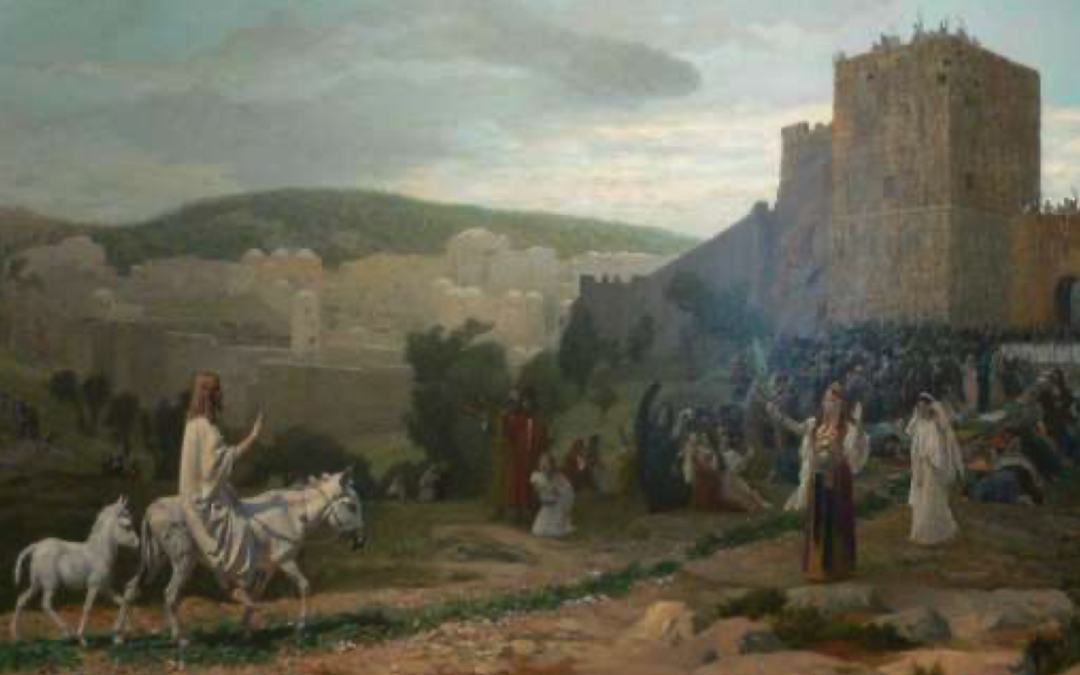
“He must have been a very good horseman!” That was the comment of an American cowboy on the story of the triumphal entry of the Lord Jesus into Jerusalem. He had a point. The Gospels tell us that the donkey Jesus rode was a young colt, which had never been ridden before. People were shouting, waving branches and laying down cloaks on the road ahead. It sounds rather like the training given to police horses today! And yet the donkey calmly carried Jesus through the streets and up to the Temple.

Animals can sense when someone is gentle and means them no harm. Many of the stories of the saints speak of their affinity with animals which trusted them and came close to them. I think the donkey somehow recognised that it was safe in the hands of Jesus, and so made no attempt to bolt or to throw Him off.

Matthew and John both connect this event with the words of the prophet Zechariah (chapter 9, verse 9). In the Good News Bible this reads, “Rejoice, rejoice, people of Zion! Shout for joy, you people of Jerusalem! Look, your king is coming to you! He comes triumphant and victorious, but humble and riding on a donkey – on a colt, the foal of a donkey.” The way the animal is described as “the foal of a donkey” makes it clear that this is a pure-bred donkey and not a mule, the offspring of a jackass and a mare.

Zechariah’s prophecy, written more than five hundred years before the coming of Christ, itself echoed an older passage, Genesis 49, verse 11. Jacob blessed his sons before he died, and said of Judah, “Binding his foal to the vine and his donkey’s colt to the choice vine, he washes his garments in wine, and his robe in the blood of grapes” (New Revised Standard Version). Jacob was speaking prophetically of the wealth of Judah’s descendants, included

among whom were David and Solomon and the kings who followed in their line. A donkey tethered to a grapevine would proceed to eat its juicy shoots, and only a wealthy man could afford to lose some of his crop in this way.

Jesus, hailed as the son of David, had all the wealth of heaven at His disposal, but as Charles Wesley puts it, “emptied Himself of all but love.” By riding into Jerusalem, surrounded by His followers, He was declaring that He was entering the city as a victorious king. This King, however, was coming in peace, seated on a donkey rather than a warhorse. What that meant for Him, and for us all, was revealed a few days later, when His victory was won, not on a battlefield, but on a cross.

A prayer:

Lord Jesus, who entered Jerusalem as a conquering King, yet coming in peace, enter into our hearts and establish in us your kingly reign of love, for your name’s sake. AMEN

– Rev John Barnett

Image: Entry of the Christ in Jerusalem, Jerome JeanLeon (1824-1904)

Animals of the Bible (10) The Hen

Animals of the Bible (10) The Hen

Last week, the week before Mothering Sunday, I wrote of how a loving mother’s prayer was granted by the Lord Jesus. This week we see Jesus expressing the mother love of God Himself.

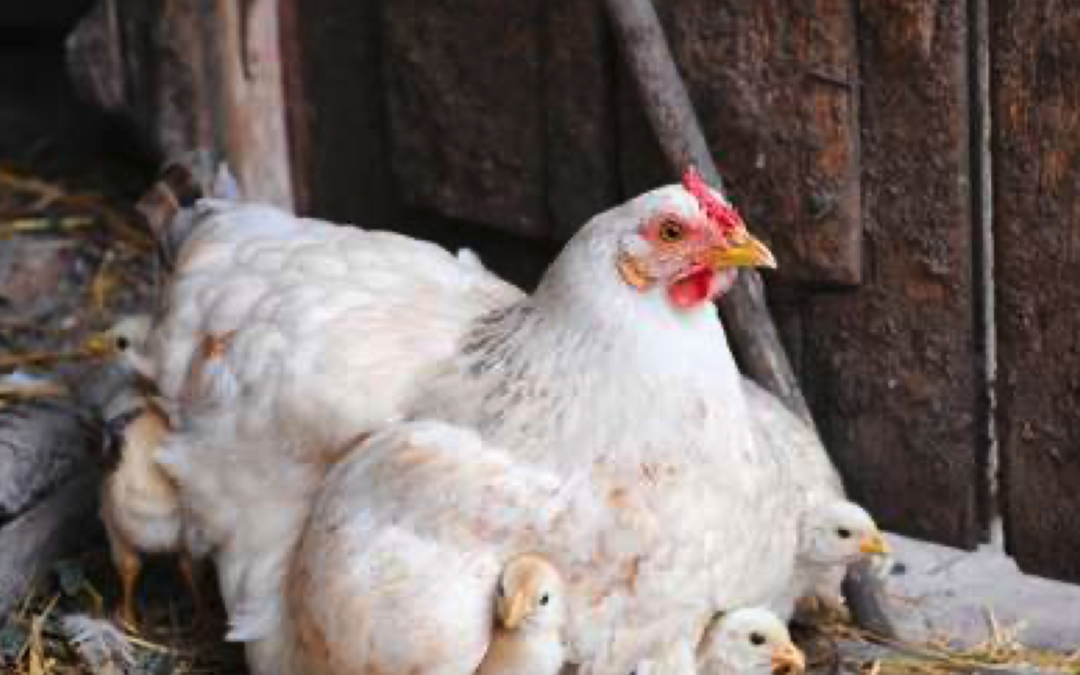
Both Matthew (chapter 23) and Luke (chapter 14) record how Jesus lamented over the Holy City, “Jerusalem, Jerusalem! You kill the prophets, you stone the messengers God has sent you! How many times have I wanted to put my arms round all your people, just as a hen gathers her chicks under her wings, but you would not let me”! Jesus foresaw the destruction that was to befall Jerusalem, and He must have longed for its people to turn to Him and accept the salvation He alone could give them.

Hens with their chicks, scratching in the dust around houses and barns, would have been a familiar sight to people in those days. When I was a boy, we kept chickens in a run at the bottom of the garden, as did many of our neighbours. I loved to watch a hen with her chicks around her, and recall how, at the slightest hint of danger, the mother would cluck and the chicks would come running to hide under her wings.

I read once of two men who were walking through the remains of a barn that had been destroyed by fire. One of them kicked casually at a small black mound among the ashes, and

page1image1700310496

three little chicks ran out from under it. It was the body of a hen that had died protecting her young from the flames.

Our Lord compared His love for the people of Jerusalem to that of a hen calling her chicks to herself and sheltering them protectively with her own body. That love was to take Him, not long after, to a cross outside the city where He laid down His life for us all.

A prayer:

O God, we have known and believed the love that you have for us. May we, by dwelling in love, dwell in you, and you in us. Teach us, O heavenly Father, the love wherewith you have loved us; fashion us, O blessed Lord, after your own example of love; shed abroad, O Holy Spirit of love, the love of God and man in our hearts. For your name’s sake. AMEN

(Henry Alford, 1810 -71)

– Rev John Barnett
Image: CackleHatchery.com.

Animals of the Bible (9) The Dog

Animals of the Bible (9) The Dog

In the UK, many dogs serve as valuable working animals, and many more are kept as pets and regarded with great affection by their owners. Their companionship has made a great contribution to the happiness and mental health of people at times when Covid-19 restrictions have greatly reduced opportunities for human contact.

Dogs were regarded very differently In the Middle East in Biblical times. Far from being pets, they were semi-wild animals that ran through the streets at night howling and snarling, searching hungrily for scraps, bones and offal. They were detested and despised, an unclean animal to the Jews, and to call a Hebrew a dog was one of the most terrible insults possible. They are referred to 41 times in the Bible, almost without exception in a negative way.

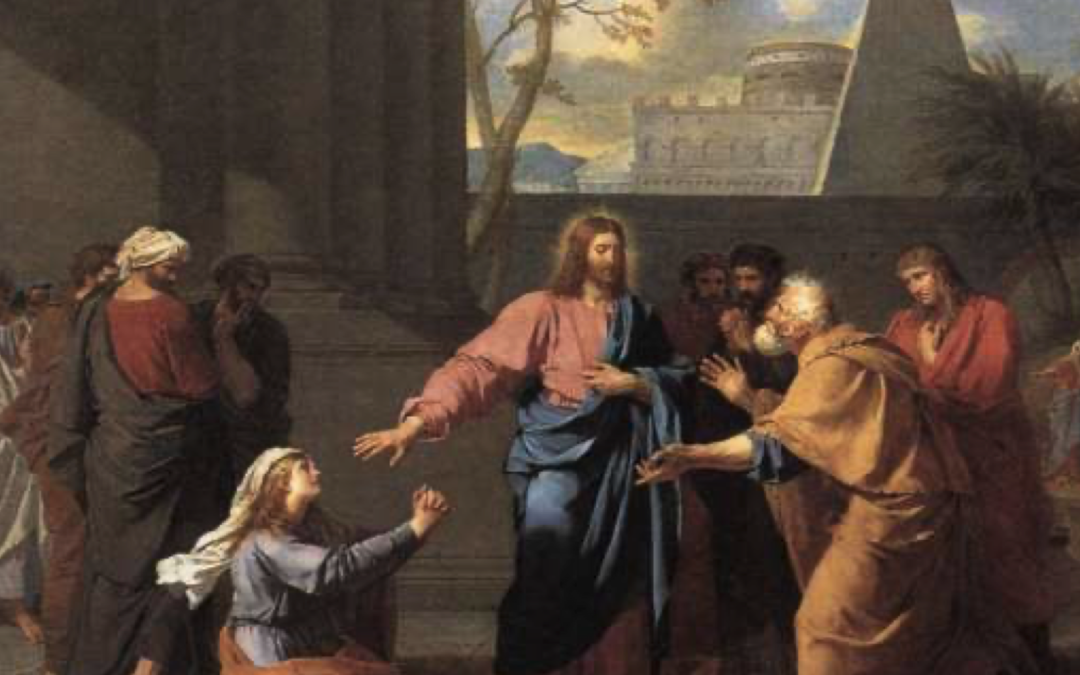
By New Testament times, the word “dog” was often used to refer to Gentiles, and Jesus Himself is recorded as using it in this way in Mark 7 and Matthew 15. A foreign, Gentile woman had come to Him, begging for help for her daughter. The girl, we are told, had an evil spirit or demon in her. She may in fact have had epilepsy, or a mental condition, or another of the illnesses which at the time were attributed to demon possession.

Jesus answered the woman, “Let us first feed the children” (meaning the Jews), “It isn’t right to take the children’s food and throw it to the dogs” (meaning Gentiles). Those words sound harsh to our ears today. Was Jesus thinking aloud, wrestling in His own mind with the prejudices of the society within which He had grown up? Or did He want to teach a lesson to

page1image864596160

His disciples, who clearly regarded the woman as unworthy of help and, as Matthew tells us, had begged Jesus to send her away? Was there a reassuring smile on His face as He spoke to her? What was His tone of voice? We cannot know. What we do know is that He was deeply impressed by the reply she gave Him: “Sir, even the dogs under the table eat the children’s leftovers!”

That was a quick-witted response, but I sense there would have been a note of anguish in the woman’s voice too. Here was a loving mother desperate to see her daughter healed, hoping against hope that this teacher from another country and culture would be able to help her.

Jesus certainly had compassion towards the woman, and did not turn her away. In Matthew’s account of this incident we are told He called her “a woman of great faith”. When she went home she found her daughter had been healed. Jesus had demonstrated that the love of God knows no bounds, and extends to Jews and Gentiles alike; indeed His grace reaches out to all human beings, regardless of nationality, colour or ethnic background – even to you and to me.

A prayer:

We are not worthy even to gather up the crumbs under your table, but it is your nature always to have mercy, and on that we depend. AMEN

(From the Prayer of Humble Access in the Methodist Worship Book, page 196)

– Rev John Barnett
Image: Christ and the Canaanite Woman, Jean-Germain Drouais (1763-1788)

Animals of the Bible (8) The Goat

Animals of the Bible (8) The Goat

In Biblical times, goats were very important as a source of milk, meat, hair and hides. The word “goat” appears 136 times in the Bible, and the word “kid” 51 times. As the word “kid” is now commonly used to refer to a human child, some modern versions use the term “young goat” instead.

Leviticus 16 gives an account of the ceremonies that took place each year on the Day of Atonement. These included casting lots over two goats. One was sacrificed as a sin-offering. The other was released into the wilderness, symbolically carrying away with it the sins of the people. This practice has given us the term “scapegoat” for any unfortunate person who is made to take the blame for the wrongdoings or failings of others.

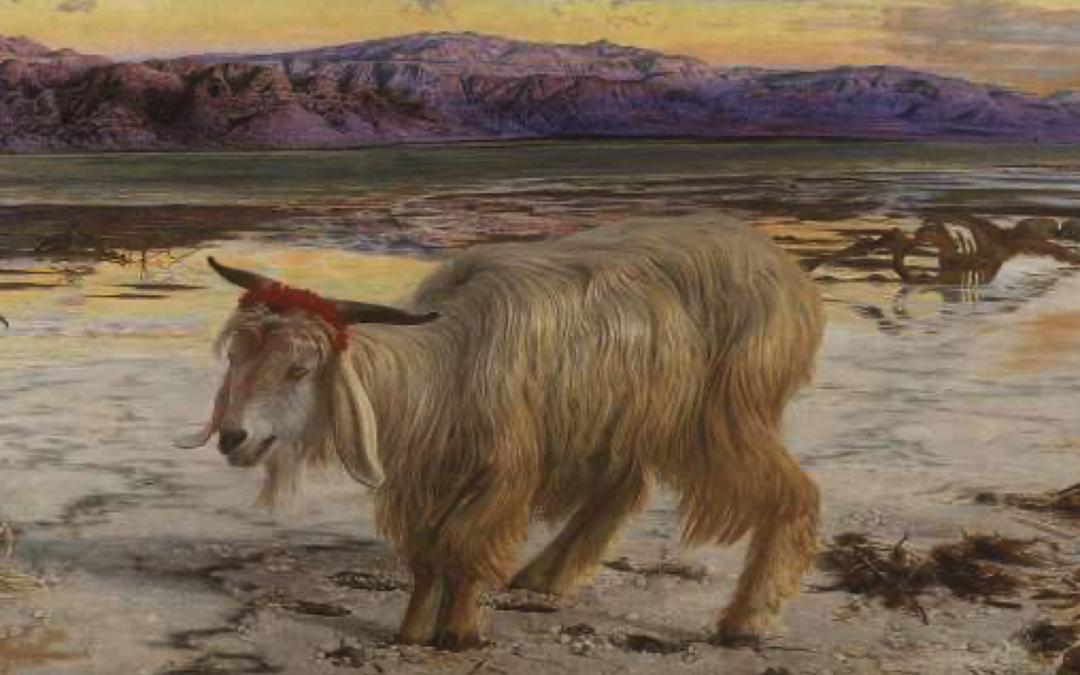
The Lady Lever Art Gallery in Port Sunlight has a striking painting of the scapegoat by Holman Hunt, who depicted the animal as a symbol of Christ, who took upon Himself the sins of the world. The goat in the painting appears hardly able to stand, as if weighed down by the burden of the sins placed upon it. The scarlet thread wound around the goat’s horns, part of the ceremony of the laying on of sins, suggests the crown of thorns.

The frame above the picture bears the words from Isaiah 53: 4, in the Authorised Version: “Surely He hath borne our griefs, and carried our sorrows; yet we did esteem Him stricken, smitten of God, and afflicted.” The desolate background is an actual scene painted by Hunt when he visited the shores of the Dead Sea. Horns and bones lie nearby, the remains of scapegoats of former years.

The poet Robert Graves used similar imagery in his poem “In the Wilderness”. He writes of Christ fasting in the desert surrounded by all manner of creatures, real and mythical, and concludes with these words:

page1image645454928

And ever with Him went,
Of all His wanderings Comrade, with ragged coat, Gaunt ribs – poor innocent – Bleeding foot, burning throat, The guileless old scapegoat; For forty nights and days Followed in Jesus’ ways,

Sure guard behind Him kept, Tears like a lover wept.

A prayer:

O Jesus, crowned with thorns and hailed in derision;
O Jesus, burdened with our sins and the curses of the people;
O Jesus, affronted, outraged, buffeted, overwhelmed with injuries, griefs and humiliations; O Jesus, hanging on the accursed tree, bowing the head, giving up the ghost, have mercy on me, and conform my whole soul to thy holy, humble, suffering Spirit.
(John Wesley, 1703 – 91)

– Rev John Barnett

Image: “The Scapegoat”, Holman Hunt (Lady Lever Art Gallery)